

The takeaway
Decision models are unbundling the "always call the big model" pattern - small, locally runnable models now handle routing and control steps with confidence scores.
Why it matters for builders
Decision models with confidence scores let agent builders add routing, guardrail, and workflow-selection steps that run locally and return structured verdicts instead of prose.
Amazon Releases Open-Source Decision Model for Agent Workflows
AWS has entered the fast-growing market for "decision models" - small, specialized AI models that pick between predefined options instead of generating free-form text. On Thursday, the company released Strands Decider 2B, an open-source model inspired by TypeSafe's Jev, and it is already topping benchmark charts for its size class.
What happened
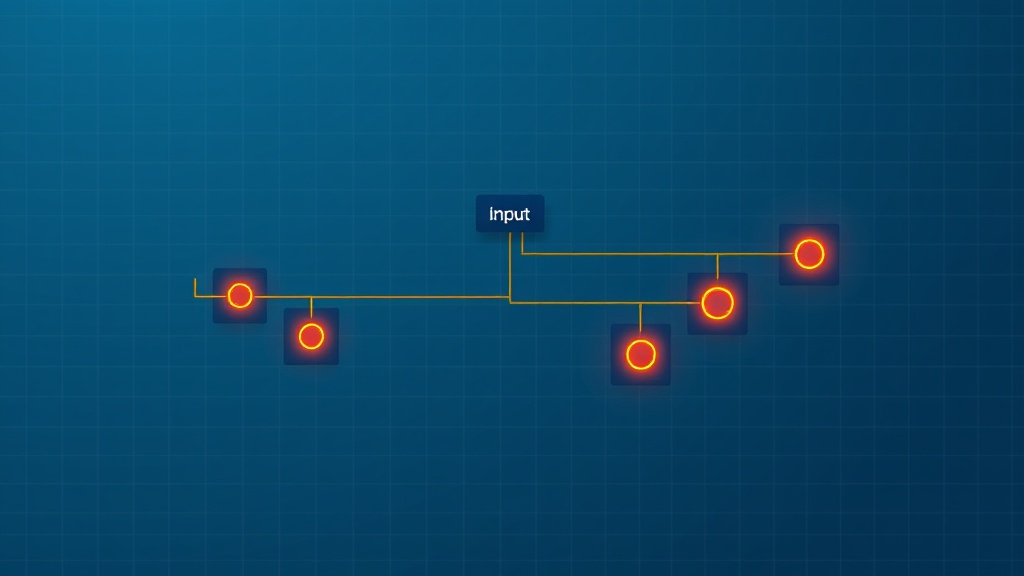
Strands Decider 2B is a 2-billion-parameter model designed for one narrow but common job in agentic workflows: deciding what to do next. Rather than produce paragraphs of output, it sorts between a closed set of pre-decided options and returns a confidence score for its choice. That makes it dramatically faster and cheaper to run than a frontier LLM for routing and control tasks.
The model came from Marc Brooker, an Amazon distinguished engineer, who built it as a homebrew project after seeing TypeSafe's Jev. It performed well enough - briefly reaching the top of the Jevbench ranking for its size - that Amazon engineers cleaned it up and released it through Strands Labs, AWS's group for building agent tooling and protocols.
Why it matters
Decision models are becoming a real category. Since TypeSafe debuted Jev earlier this year, dozens of similar models have appeared, and OpenAI announced a similar offering the same week as Amazon's release. The appeal is straightforward: most steps in an agent pipeline do not need a frontier model's reasoning - they need a fast, reliable "what next?" decision, with a confidence score you can act on.
Brooker frames it as a cost and reliability play. "What originally piqued my interest in this class of models was that they make a perfect decider for a workflow step - 'what is the next thing for me to do here, based on where I am?'" he told TechCrunch. Closed-domain answers plus confidence scores, he said, make for a workflow step that is "more reliable, lower latency, potentially lower cost."
The name behind the category matters too. TypeSafe called its model Jev after the 19th-century economist William Stanley Jevons, whose paradox holds that cheaper compute tends to increase demand for it. The flood of decision models - and Amazon's entry with an open-source, locally runnable 2B - is a bet that the same dynamic will play out for agent intelligence.
Builder impact
For teams building agents, the takeaway is that the "always call the big model" pattern is being unbundled. Decision models like Strands Decider 2B - and the confidence scores they emit - let you build routing, guardrail, and workflow-selection steps that run locally, cost pennies, and return structured verdicts instead of prose you have to parse. If the category sticks, expect decision models to become a standard component in agent stacks, sitting between orchestration logic and the frontier models that actually generate content.
The Automation Brief
Read 5 AI stories instead of 50.
The essential moves in AI agents, models, automation and infrastructure — filtered for builders and operators, with the part that actually matters.
No noise. Unsubscribe anytime.
Editorial notes
Stefan Trbojevic
n8n Lab Editorial
1 October 2026
1 October 2026
AI disclosure: AI assisted with research and drafting. Factual claims are reviewed by an editor.