
The takeaway
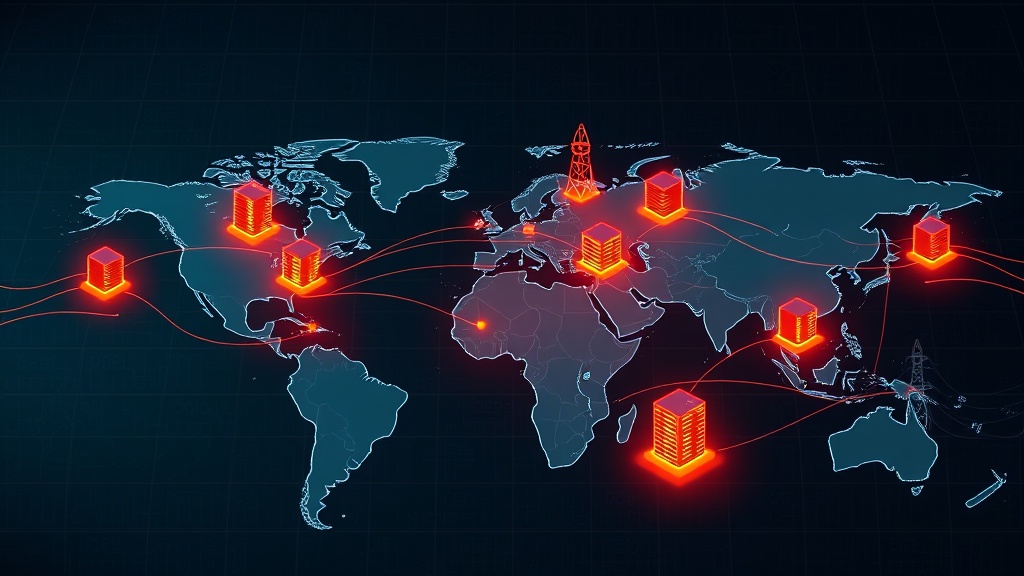
The AI buildout is hitting a geographic wall: community opposition in Europe and Asia is delaying billions in data center investment, and the gap between government AI ambitions and local resistance is widening.
Why it matters for builders
For AI builders and teams running training or inference workloads, data center capacity is becoming a land-use and politics problem, not just an engineering one. Local opposition can delay or cancel multi-billion-dollar projects, tightening compute supply and raising costs.
AI Data Center Backlash Spreads Across Europe and Asia
Opposition to power-hungry AI data centers is no longer an American problem. Communities across Europe and Asia are pushing back on the massive energy, water, and land footprint of the AI buildout, and the resistance is starting to hit investors where it hurts.
What's happening
According to CNBC, public backlash has already disrupted roughly $42 billion of data center investment in Europe through delays and cancellations, citing research from STL Partners. That compares with about $77 billion in the United States.
The European Data Center Monitor found that more than 70 data center projects in Europe were rejected or restricted between January and April alone, more than in all of 2025. What began in local town halls has now moved to courts, regulators, and parliaments.

Where the pressure is building
Denmark passed an emergency law that could put data centers at the back of the queue for grid power applications. Spain proposed rules requiring new centers to source 80% of their electricity from renewables. Projects in the UK have stalled after local opposition over water use and power consumption.
The friction is spreading to Asia too. In South Korea, home to Samsung Electronics and SK Hynix, AI data centers were named one of three priority investment areas in June. Yet residents in Seoul's Geumcheon district have protested a data center near their homes for 172 consecutive days as of mid-August.
Why it matters for builders
The message for AI teams and infrastructure investors is blunt. "A community's ability to derail a $10 billion data center plan is quite powerful," Asya Walters, managing director at Alvarez & Marsal, told CNBC.
Part of the friction is a fundamental visibility problem. "We used to be a completely unknown part of the economy. We were just a black box," Dominic Ward, CEO of data center operator Verne, told CNBC. "Now we are one of the fundamental layers driving the economy."
The AI boom shows no sign of slowing, but the gap between government AI ambitions and local resistance is widening. For builders deploying agents and training workloads, the takeaway is clear: compute capacity is no longer just an engineering problem, it is a land-use and politics problem.
The Automation Brief
Read 5 AI stories instead of 50.
The essential moves in AI agents, models, automation and infrastructure — filtered for builders and operators, with the part that actually matters.
No noise. Unsubscribe anytime.
Editorial notes
Stefan Trbojevic
n8n Lab Editorial
3 October 2026
3 October 2026
AI disclosure: AI assisted with research and drafting. Factual claims are reviewed by an editor.


