
The takeaway
AI data centers are now the largest concentrated load on the US electrical grid, and their synchronized behavior during faults creates cascading risks that the grid was never designed to handle.
Why it matters for builders
Every new AI deployment adds load to an already strained grid. Teams planning GPU clusters should factor power interconnection timelines — not just chip availability — into their infrastructure roadmap.
AI Data Centers Caused a Power Surge Across Half the US When a Single Line Failed
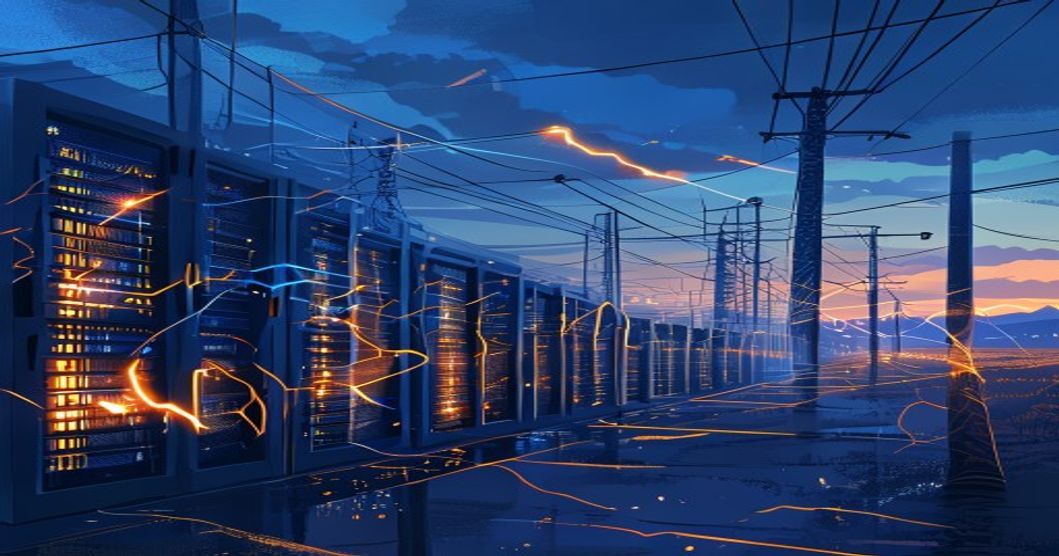
A single fallen power line outside Washington, DC this week triggered a chain reaction that sent voltage spikes rippling from Northern Virginia to Chicago — and the culprit wasn't the weather. It was 3.1 gigawatts of AI data centers disconnecting from the grid almost simultaneously, exposing a structural weakness that is doubling in scale every two years.
What Happened
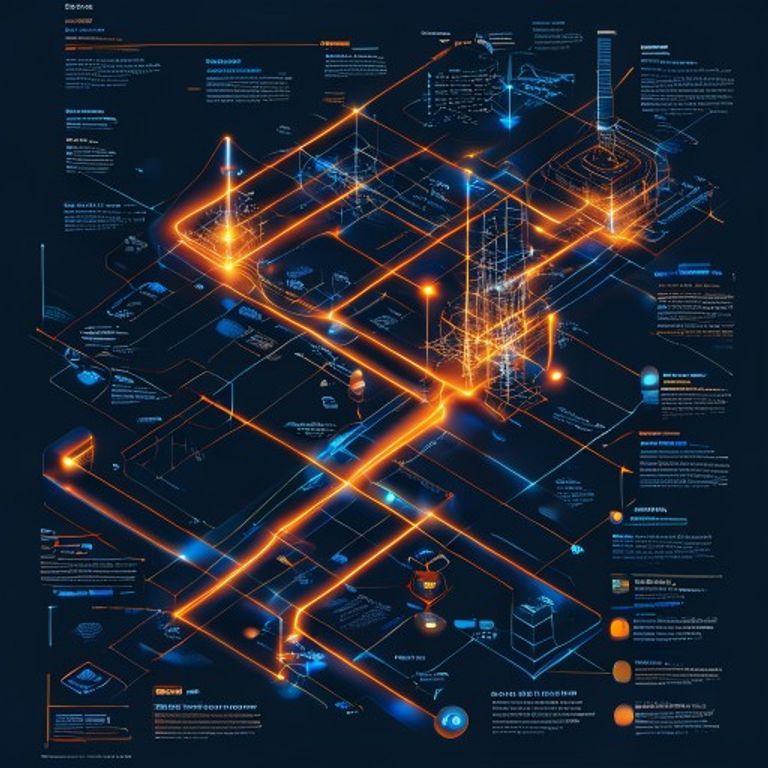
At 7:56 AM on Wednesday, a high-voltage transmission line serving data centers in Northern Virginia failed. Within 30 seconds, data centers across the region switched to backup battery power — the correct response for protecting their own operations. But because they all made the same decision at the same moment, 3.1 gigawatts of load vanished from PJM Interconnection, the grid operator serving 67 million customers across 13 states.
The grid suddenly had too much power and not enough demand. Voltage spiked, additional loads dropped off, and at one point PJM had an extra 3.49 gigawatts with nowhere to go. It took 11 minutes to stabilize. Lights flickered from Chicago to Boston to Miami.
"The data centers are such a big load on the grid that they can have detrimental impact on the surrounding grid," said Bob Marshall of Ting Labs, whose IoT sensor network captured the event in real time.
Why It Matters
This was not an isolated incident. A similar event occurred on PJM's grid in 2024 when 60 data centers disconnected 1.5 gigawatts. The July 2026 event was twice as large. Data centers accounted for roughly 6% of PJM's load in 2024. By 2040, they're projected to consume 24%.
The North American Electric Reliability Corporation (NERC) has already issued its highest-urgency "Level 3 Essential Actions" alert after documenting four additional Eastern Interconnection events this year. The pattern is clear: as AI workloads concentrate more power in fewer locations, a single fault can cascade across an entire region.
The Fix
Two approaches are emerging. The first is grid coordination — getting data centers to stagger their disconnection rather than acting as a herd. Ali Zain Banatwala, senior market models specialist at the Independent Electricity System Operator, told TechCrunch that data centers need to "sequentially either disconnect or reconnect" to give grid operators time to compensate.
The second is hardware-level resilience. Startup ON.Energy is developing campus-wide uninterruptible power supplies that hide data centers behind battery banks, presenting the grid with a consistent, well-behaved load. The company is currently installing 3 gigawatts of these systems across four data center campuses. ERCOT, Texas's grid operator, is moving to require large loads to "ride through" disruptions rather than instantly bailing out.
The clock is ticking. Transformer lead times are now 128 weeks. Switchgear is sold out through 2028. Of roughly 16 gigawatts of data center capacity announced for 2026, analysts estimate only about 5 GW is actually under construction. The rest sits in limbo, waiting for equipment that can't be delivered fast enough — and every new gigawatt connected without grid-level coordination makes the next fault potentially more dangerous than the last.
The Automation Brief
Read 5 AI stories instead of 50.
The essential moves in AI agents, models, automation and infrastructure — filtered for builders and operators, with the part that actually matters.
No noise. Unsubscribe anytime.
Editorial notes
Stefan Trbojevic
n8n Lab Editorial
26 July 2026
26 July 2026
Sources
AI disclosure: AI assisted with research and drafting. Factual claims are reviewed by an editor.