

The takeaway
Visual reasoning is moving from 'describe the image once' to 'inspect the image repeatedly' - a design pattern that buys accuracy without buying a bigger model.
Why it matters for builders
Repeated visual inspection with a small model can beat a single high-resolution pass with a large one, which changes cost math for any agent that has to look at screenshots, plots, video or physical scenes.
Elorian's Glimpse Model Sees Images Instead of Describing Them
Most multimodal models look at an image once: they convert it to tokens, then reason about it in text. Elorian, a Palo Alto startup that raised $55 million at a $300 million valuation before shipping anything, released its first model on Friday and is betting the missing piece is looking again.
Glimpse is launching as a research preview with API access and a chat interface. It was trained by a small team on a few hundred GPUs and is substantially smaller than the frontier systems it benchmarks against, according to TechCrunch.
What Glimpse does differently
Elorian calls the mechanism a "visual scratch space." Mid-reasoning, Glimpse can crop into a region of an image, pull specific frames from a video, or run code to measure what it is looking at. Instead of one compressive pass over pixels, it keeps returning to the source, like a person pinching to zoom on a photo.
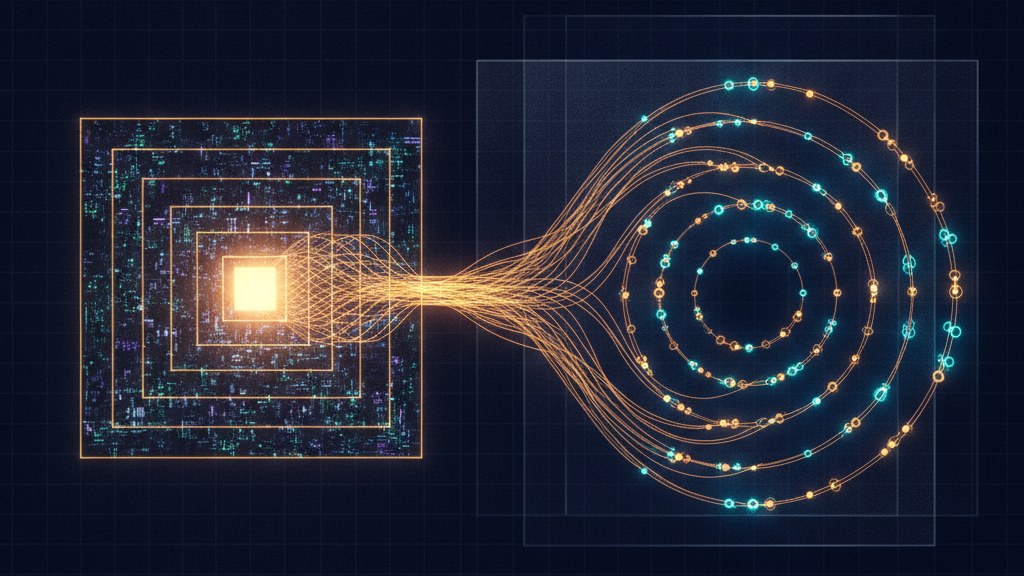
The framing comes from CEO Andrew Dai, a former Google DeepMind researcher. He photographed a finished board game and asked a frontier model who was winning. It could not answer. Board games, he told TechCrunch, "each have their own visual language, each have their own iconography, symbols" - easy for an adult to read with almost no text, hard for a model that never looks twice.
The idea is not entirely novel. OpenAI added crop-and-zoom during reasoning to its o-series models in 2025. Elorian's claim is architectural: it built the model around the loop rather than bolting it onto a text-first stack, and did it cheaply.
Price and vendor claims
Glimpse costs $0.60 per million input tokens and $3 per million output tokens, below mid-level systems like Sonnet and Sol and above lightweight ones like Haiku and Luna. On Elorian's own evaluations it outperforms GPT-6 Astra on scientific chart reasoning and short-form video captioning. Treat those numbers as vendor claims until independent evaluations land.
Why builders should care
For teams wiring models into agent pipelines, the interesting part is the cost of repeated inspection. Captioning a screenshot once and reasoning in text is cheap but lossy; re-cropping and re-reading is expensive if every look is a full model call. Glimpse's pitch is that a small model with a tight look-again loop gets more right per dollar than a large model with one wide glance.
That matters where visual detail carries the meaning: robotic inspection, scientific plots, video archive search, production QA. Elorian names robotics firms, labs, media and creative companies as first targets, and wants to move from seeing to doing - building a scene model, then controlling robots directly.
If the loop holds up under third-party testing, "visual scratch space" becomes a standard architectural knob rather than a startup differentiator.
The Automation Brief
Read 5 AI stories instead of 50.
The essential moves in AI agents, models, automation and infrastructure — filtered for builders and operators, with the part that actually matters.
No noise. Unsubscribe anytime.
Editorial notes
Stefan Trbojevic
n8n Lab Editorial
17 October 2026
17 October 2026
AI disclosure: AI assisted with research and drafting. Factual claims are reviewed by an editor.


