

The takeaway
Orbital data centers just got a major vote of confidence: Nvidia is backing Starcloud's $2.3B effort to run AI inference in space.
Why it matters for builders
For AI builders and automation engineers, Starcloud is a leading indicator that the compute layer is expanding beyond the data center. Today's orchestration stacks assume Earth-bound, always-on infrastructure; orbital inference introduces new variables like latency, intermittent connectivity, and edge-like deployment patterns. The $25 million Nvidia check suggests those challenges are being taken seriously at the highest level. The first orbital AI workloads are only a rideshare launch away.
Starcloud Raises $250M to Put AI Data Centers in Orbit
Starcloud, a two-year-old startup building satellites that run AI inference in orbit, has added a $250 million extension to its Series A, lifting its valuation to $2.3 billion and its total funding to $450 million since 2024.
What happened
The extension was led by Manhattan West Ventures, with Nvidia committing $25 million and Cisco Investments joining as a new backer alongside Benchmark, EQT, Soma, NFX, 776, and others. The fresh capital will fund a larger 100,000-square-foot manufacturing facility in Woodinville, Washington, and advance Starcloud-3, the company's largest orbital data center spacecraft, designed to fly on SpaceX's Starship.
The company is betting that moving compute off Earth solves the AI industry's energy bottleneck. Its first satellite, Starcloud-1, launched in November 2025 carrying the first data-center-grade GPU in orbit and was the first to train an AI model in space. Next up are two Starcloud-2 satellites, 8-kilowatt compute platforms slated for rideshare flights in 2027, serving inference workloads for customers including U.S. government agencies.
Why it matters
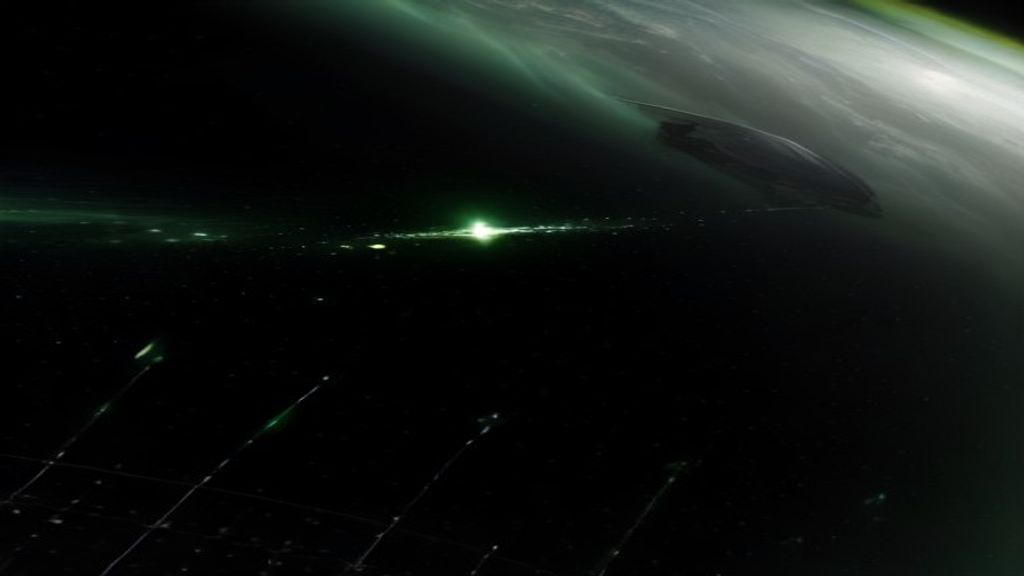
AI training and inference are hitting hard physical limits on the ground: power, cooling, and land. Orbital data centers sidestep those constraints, drawing on solar power and the vacuum of space for cooling. Nvidia's direct investment is the clearest signal yet that major compute players see orbital capacity as a real part of the AI infrastructure stack rather than a moonshot.
The timing matters for another reason. CEO Philip Johnston is stockpiling launch capacity because the rideshare market is tightening as SpaceX and others prioritize their own missions. Securing a path to orbit may soon matter as much to AI infrastructure companies as securing GPUs.
Builder impact
For AI builders and automation engineers, Starcloud is a leading indicator that the compute layer is expanding beyond the data center. Today's orchestration stacks assume Earth-bound, always-on infrastructure; orbital inference introduces new variables like latency, intermittent connectivity, and edge-like deployment patterns. The $25 million Nvidia check suggests those challenges are being taken seriously at the highest level. The first orbital AI workloads are only a rideshare launch away.
The Automation Brief
Read 5 AI stories instead of 50.
The essential moves in AI agents, models, automation and infrastructure — filtered for builders and operators, with the part that actually matters.
No noise. Unsubscribe anytime.
Editorial notes
Stefan Trbojevic
n8n Lab Editorial
21 August 2026
21 August 2026
Sources
AI disclosure: AI assisted with research and drafting. Factual claims are reviewed by an editor.
